

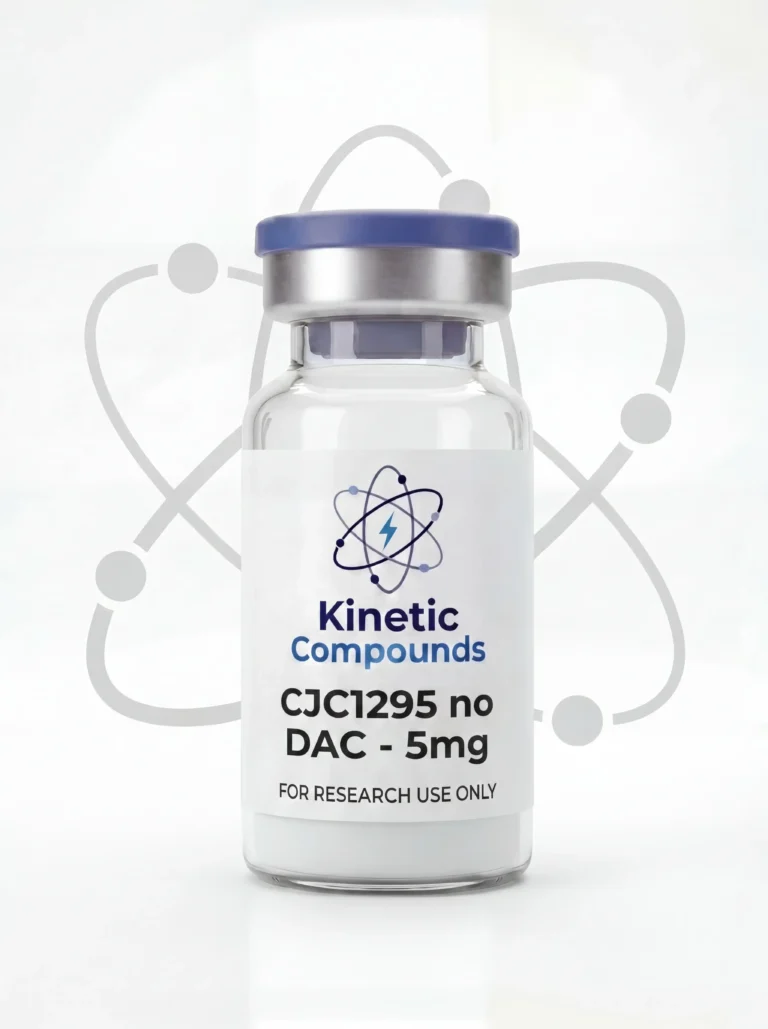
CJC-1295 no DAC
Original price was: $70.00.$65.00Current price is: $65.00.CJC-1295 without DAC (also known as Mod GRF 1-29) is a synthetic 30-amino-acid analog of growth hormone-releasing hormone (GHRH), modified at four positions for enhanced enzymatic stability without the Drug Affinity Complex. Extensively studied in preclinical research for its role in pulsatile GH release, typically in combination with GHRP-class peptides. Lyophilized powder, ≥99% purity, third-party tested. For laboratory and research use only — not for human consumption.
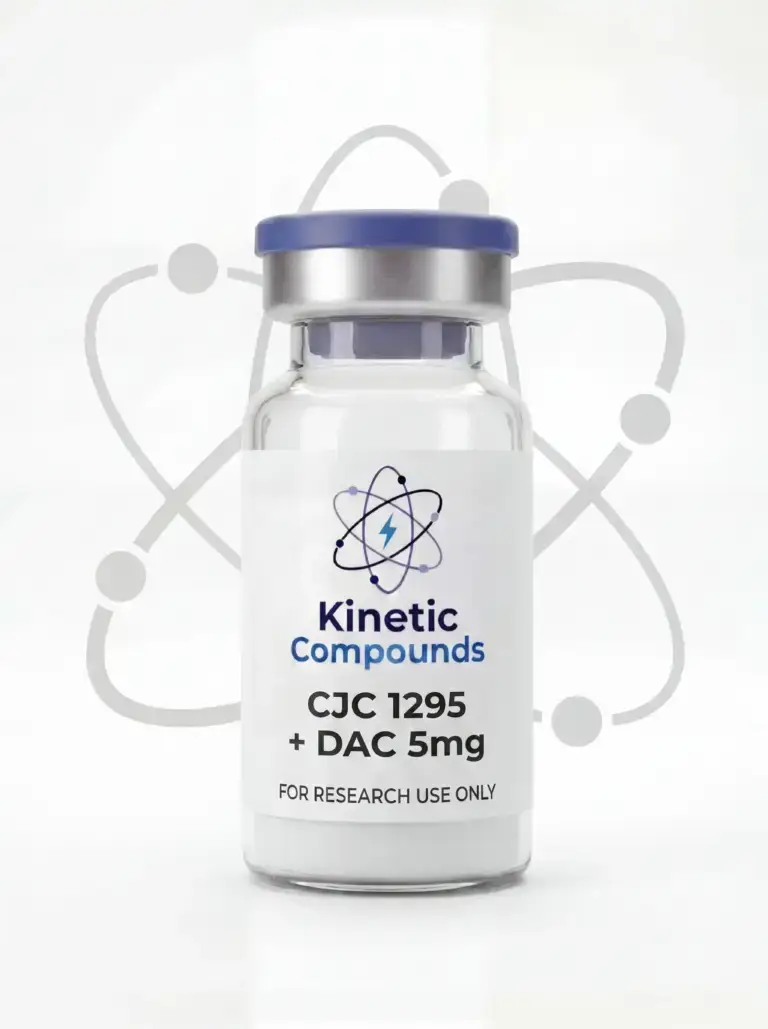
CJC-1295 with DAC
$61.00CJC-1295 with DAC is a synthetic long-acting analog of growth hormone-releasing hormone (GHRH), modified with a Drug Affinity Complex (DAC) for extended half-life. Extensively studied in preclinical research for its role in sustained GHRH-receptor activation and GH-axis modulation. Lyophilized powder, ≥99% purity, third-party tested. For laboratory and research use only — not for human consumption.
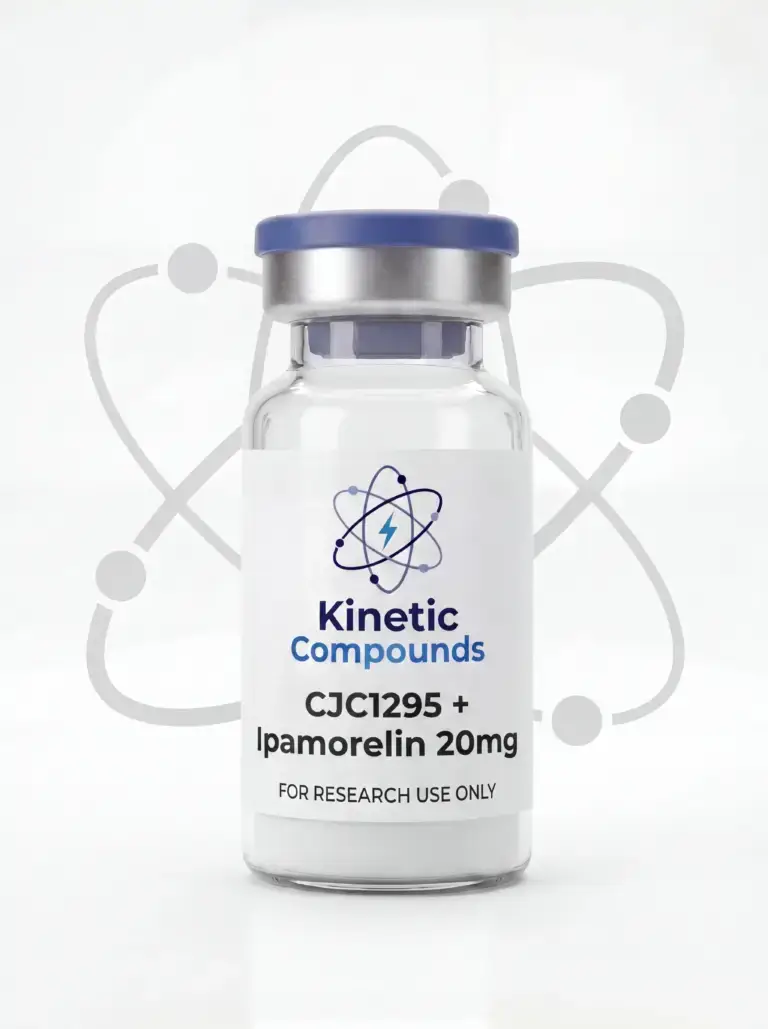
CJC-1295 + Ipamorelin
$142.00CJC-1295 + Ipamorelin Combo is a research peptide blend pairing two of the most extensively studied growth hormone secretagogues. CJC-1295, a long-acting GHRH analog, and Ipamorelin, a selective GHRP, have been individually researched for their complementary roles in pulsatile GH release pathways. Lyophilized powder, ≥99% purity per compound, third-party tested. For laboratory and research use only — not for human consumption.
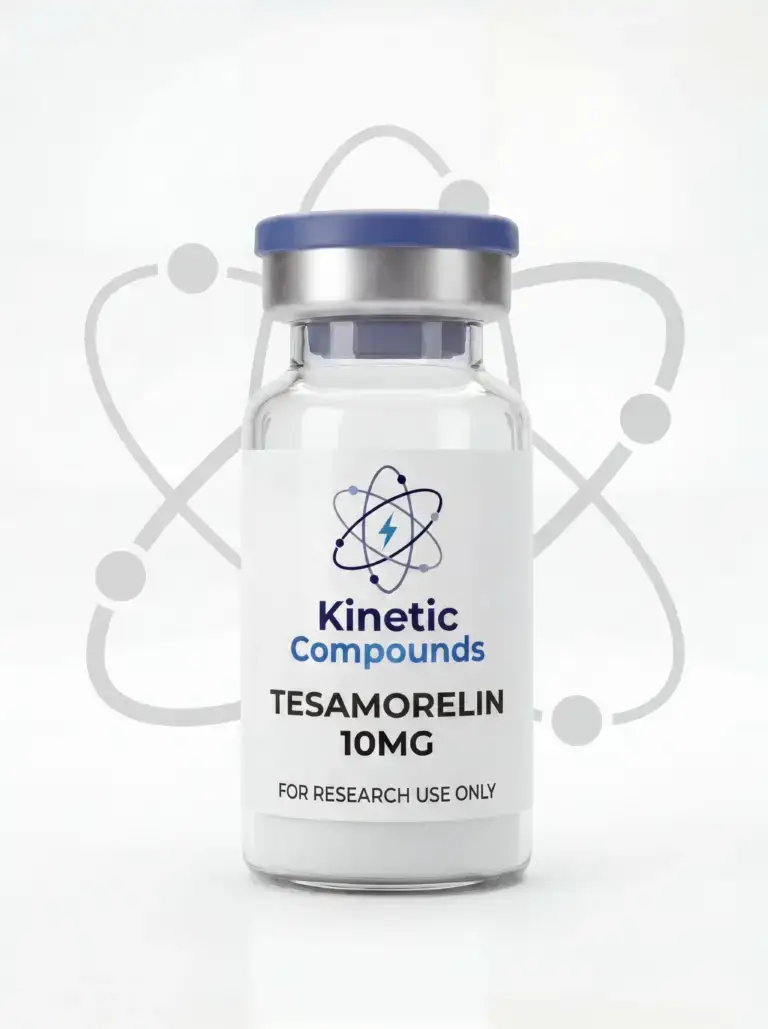
Tesamorelin
$86.00Tesamorelin is a synthetic analog of growth hormone-releasing hormone (GHRH) composed of 44 amino acids with a modified N-terminus for enhanced stability. Extensively studied in preclinical research for its role in GH secretion, body composition, and metabolic pathways. Lyophilized powder, ≥99% purity, third-party tested. For laboratory and research use only — not for human consumption.
